





Capital is flowing into European data centres faster than verified opportunities can absorb it
— which makes technical certainty the scarcest asset in the market. Hyceon gives investors, developers and landowners the engineering-grade evidence behind every decision: what capacity a site or asset can genuinely deliver, by when, at what cost, and with what permitting risk. Buy-side, sell-side or build: the same integrated team that designs and permits these facilities prices their risk.
Challenges investors & developers face today
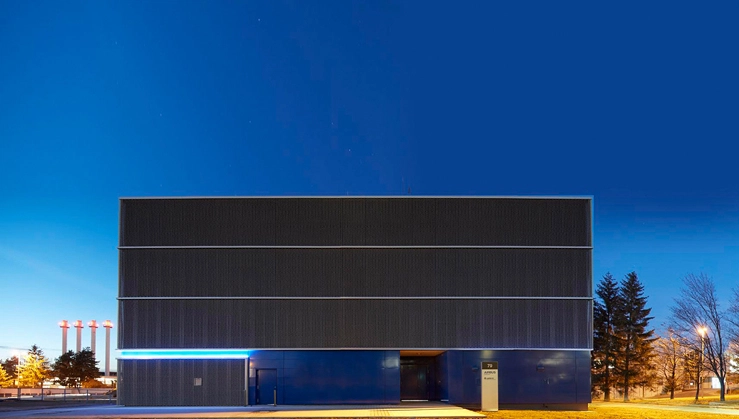
Marketed capacity vs. deliverable capacity
The gap between the number on the teaser and the megawatts the facility can genuinely deliver — grid, cooling, water and permitting all shape what capex actually buys.
Permitting status uncertainty
Permits that read as “secured” but carry conditions, expiries or missing components — the details that decide whether a site’s valuation survives due diligence.
ESG evidence for financing
Taxonomy alignment, CSRD readiness and climate-risk exposure now shape which capital pools can invest and on what terms — assets without the evidence base finance worse.
AI-era asset valuation
Density readiness, liquid-cooling adaptability and heat-reuse potential now materially drive asset values, features many existing valuations don’t yet price.
Priority Services for Investors & Developers

AI-readiness drives valuation
In a market where AI-ready capacity commands materially higher rents, technical due diligence must now assess densification pathway, liquid-cooling adaptability and heat-reuse potential as core value drivers — not add-ons. Hyceon prices AI-readiness the same way we price grid capacity: as a first-order determinant of what the asset is really worth.
10
Frequently Asked Questions

Design quality and standards compliance, genuinely deliverable capacity versus marketed capacity, permitting status and conditions, grid connection reality, expansion headroom, and capex/opex assumptions. The output is a risk-priced view of the asset, issues surfaced before they become the buyer’s problem, and negotiating leverage grounded in engineering fact.
Materially: in supply-constrained European markets, a site with secured permits and grid connection can be worth multiples of comparable unpermitted land, because it carries years of de-risked time-to-market. Verifying what is actually permitted — scope, conditions, validity — is central to any credible valuation.
Buy-side diligence protects the acquirer: independent verification of the asset’s claims and risks. Sell-side diligence prepares the vendor: assembling the verified technical evidence base that sustains value under buyer scrutiny and accelerates the transaction. Hyceon delivers both — the discipline is identical; only the client changes.
They convert sustainability into financial mechanics: Taxonomy alignment affects which capital pools an asset can access and on what terms, while CSRD makes sustainability disclosure a legal obligation for large EU operators. Assets with Taxonomy-aligned design evidence and disclosure-ready data command better financing and broader buyer pools.
Yes. Hyceon evaluates land for data centre suitability and prepares the technical evidence base — power pathway, connectivity, environmental and planning status, that lets landowners, municipalities and utilities position sites credibly to operators and investors, working alongside commercial agents.
Before the letter of intent, not after: the highest-value findings — grid reality, permitting exposure, capacity claims — shape price and structure, not just confirmation. On developments, engaging at feasibility stage lets the delivery plan and the investment case be built on the same assumptions.